Fraud & Scam Awareness
Scammers are getting more convincing.
Calls that appear to come from your bank. Text messages warning that your account has been locked. Someone offering to “help” by taking control of your computer. Scams do not always look suspicious anymore.
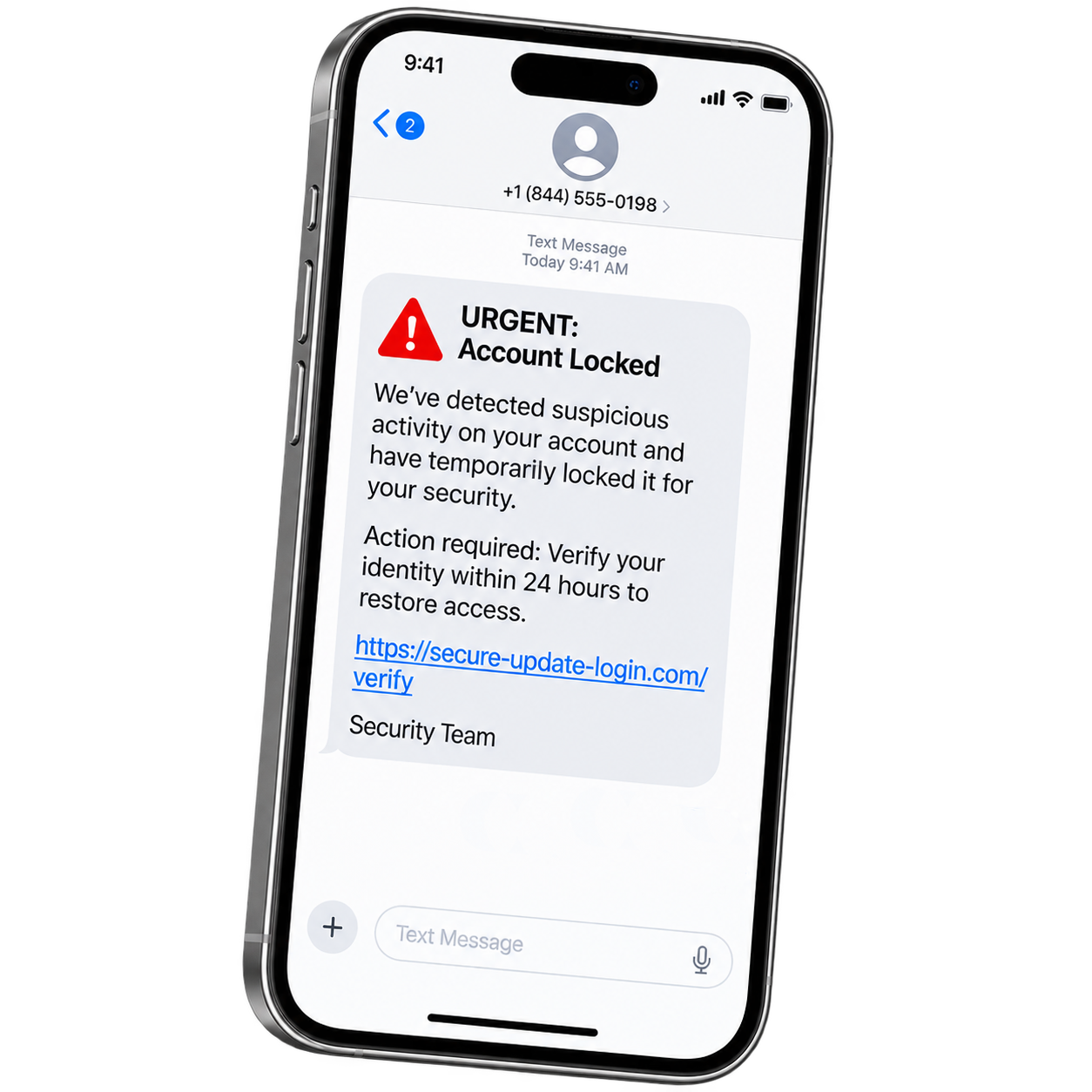
Fraudsters can use familiar names, phone numbers, convincing websites and personal information to make a message feel legitimate. They also know that when people are worried about their money, they are more likely to act quickly.
When something feels urgent or unexpected, slow down.
Take a moment before you click a link, share information, move money or follow instructions from someone who contacted you.
A few things to remember first
If someone unexpectedly contacts you claiming to be from Franklin Savings Bank:
Do not share your password, PIN, Secure Access Code or other login credentials.
A bank employee will not direct you to transfer funds to a “safe” account.
Never give an unexpected caller remote access to your phone or computer.
Avoid links asking you to verify, unlock or secure your account.
“Your bank” is calling. Or is it?
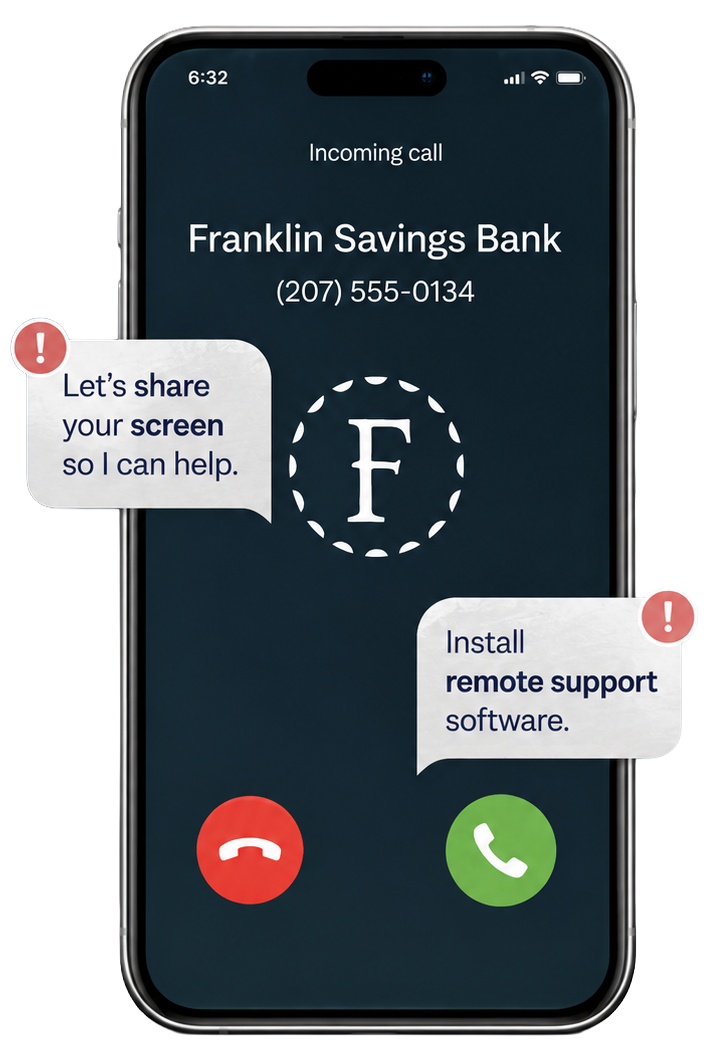
Caller ID is not proof of who is actually calling.
Scammers can spoof caller ID information to make a call appear to come from a familiar business or phone number. They may even know your name, address or other information about you. That does not mean the person on the other end of the line is legitimate.
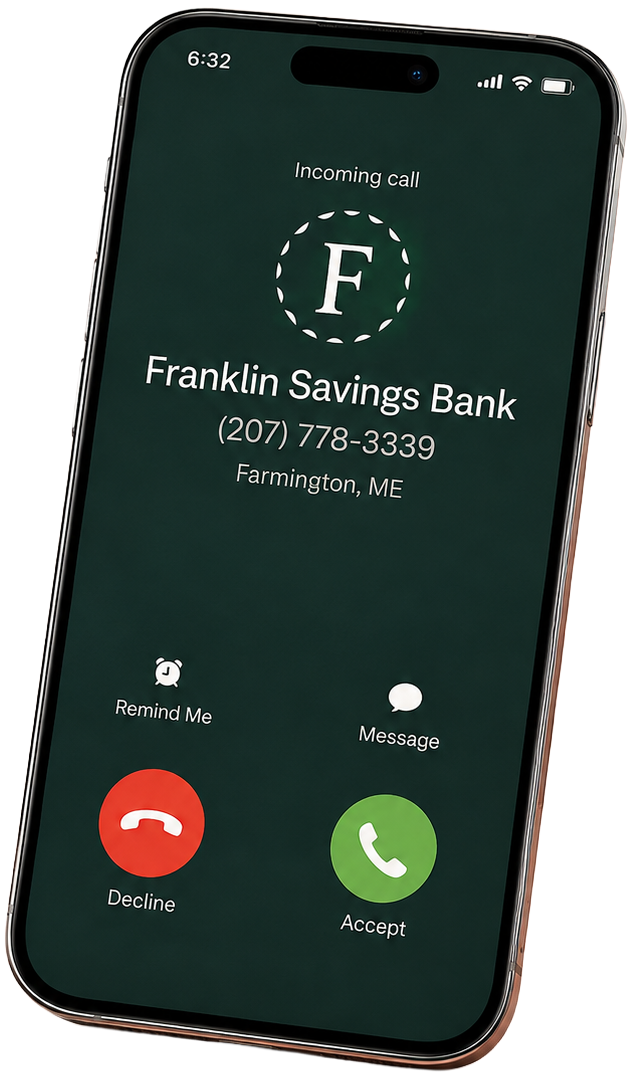
A common bank impersonation scam begins with a call or text claiming there has been suspicious activity on your account. The person may sound professional and may tell you they are calling from a “fraud department” or “security team.”
Keep the code to yourself
A Secure Access Code or other one-time verification code is designed to help protect your account.
One account takeover tactic involves a scammer attempting to log into a real account and triggering a legitimate verification code. The customer receives the code, and then the scammer, often while pretending to be from the bank, asks the customer to read it back.
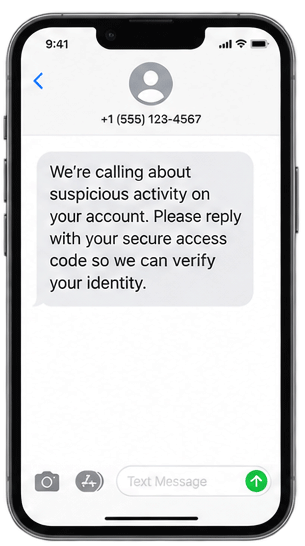
“Let me share your screen so I can help.”
No.
A scammer may claim there is a problem with your Online Banking, computer or account and offer to “walk you through” the solution. They may ask you to share your screen, download remote-support software or allow them to control your phone or computer.
Giving someone remote access can allow them to see information on your screen, watch you log in, access sensitive information or potentially make transactions from your device.
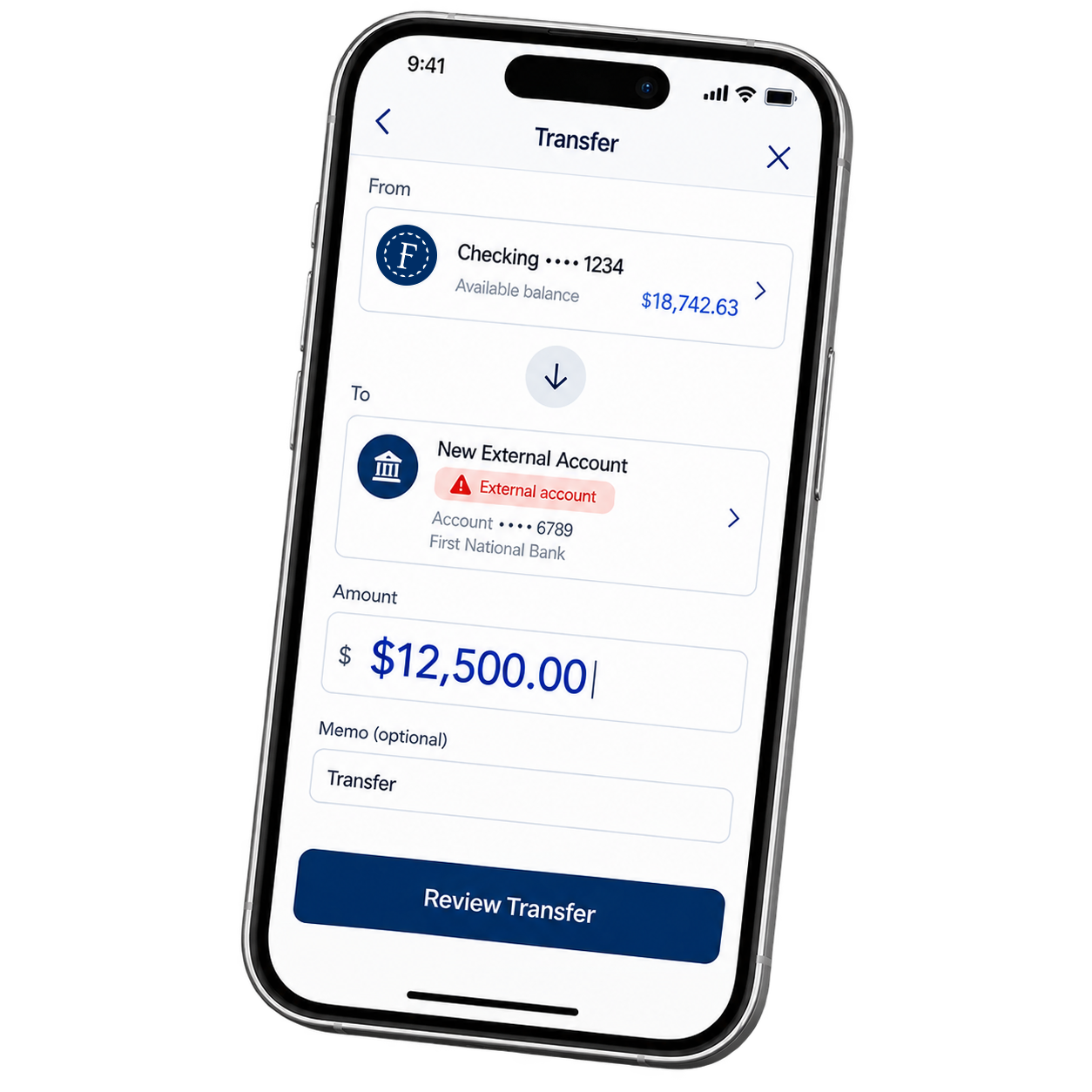
Your money does not need a “safe account”
This scam can be particularly convincing because the person contacting you may claim they are trying to protect you from fraud.
You might be told that your account has been compromised and that you need to transfer your money somewhere else to keep it safe. The destination might be described as a “safe account,” “secure account” or temporary holding account.
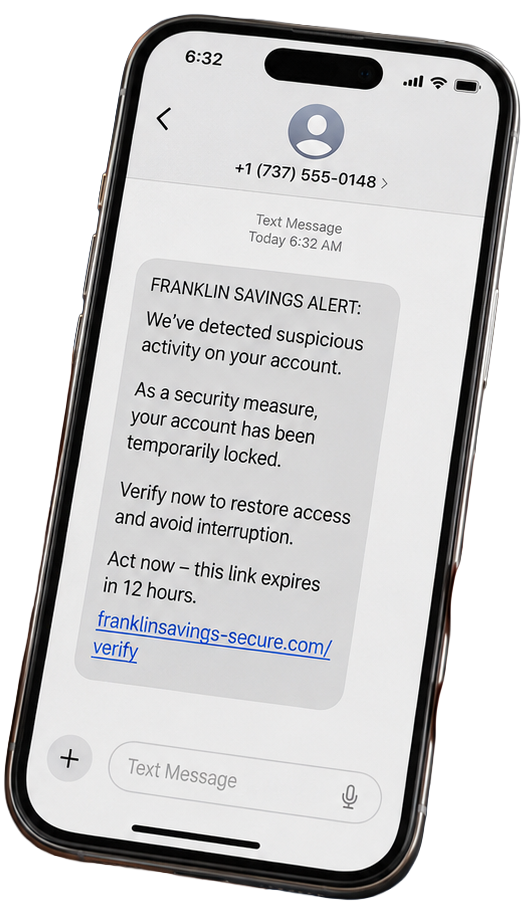
That text is in a hurry. You do not have to be.
Scam messages often use urgency because urgency works.
Do not let the deadline in the message become your deadline.
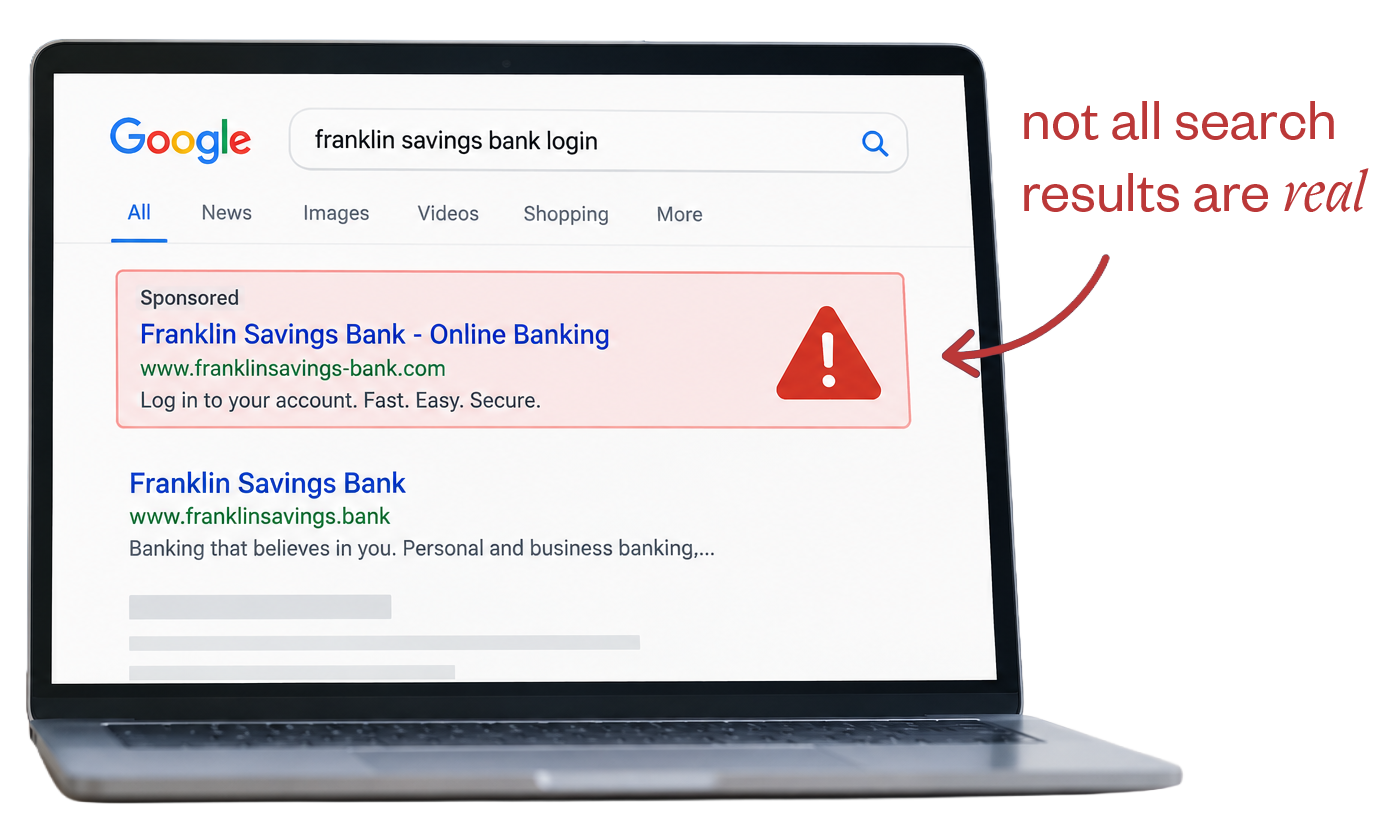
Be careful how you find the login page, too
Not every fake banking page arrives by text or email.
Criminals can use search-engine advertisements and lookalike websites designed to resemble legitimate financial institutions.
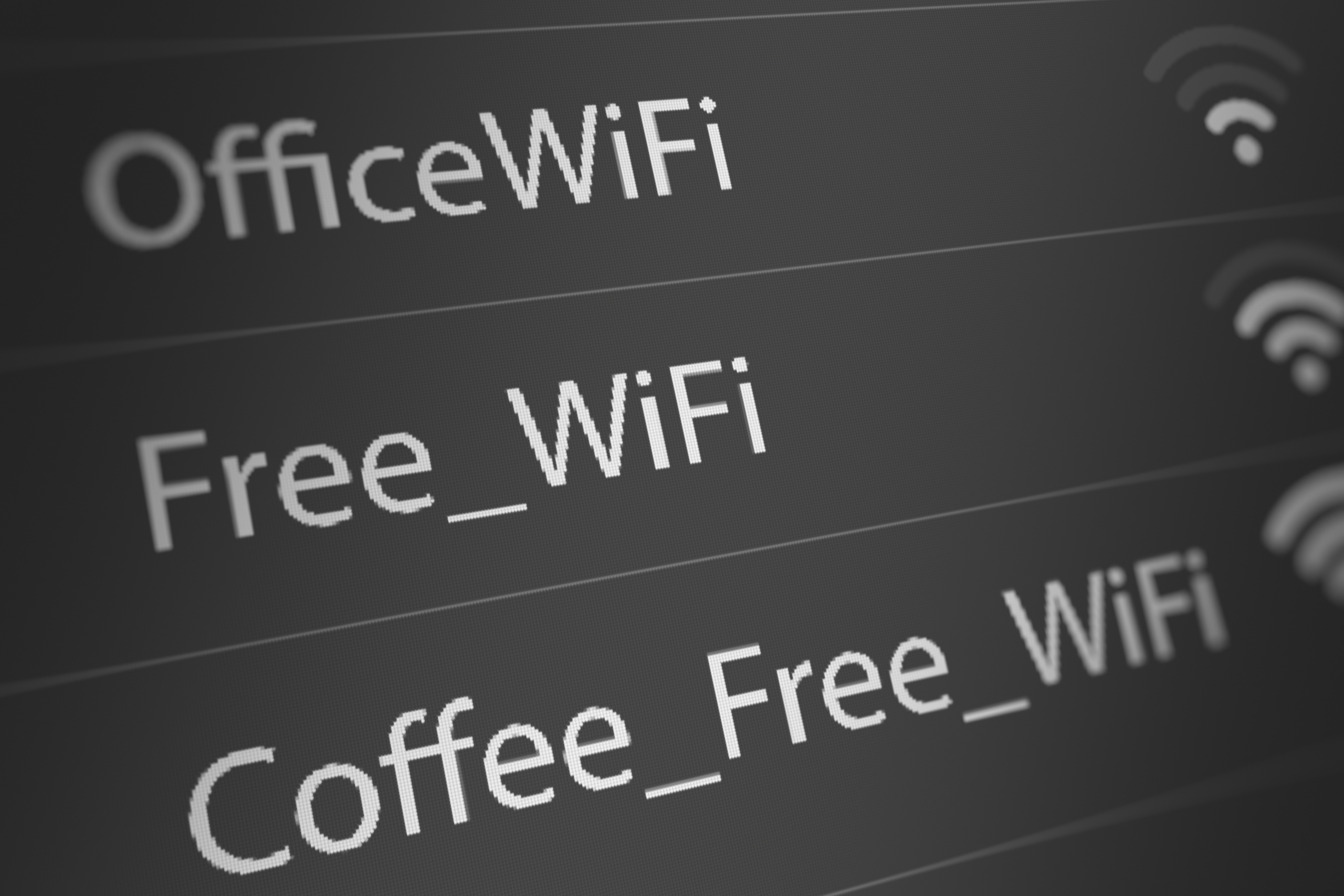
Think twice before banking on public Wi-Fi
Coffee shop Wi-Fi is convenient. That does not make it the best place to access sensitive financial information.
Public networks give you less control over the connection. Criminals can also create lookalike hotspots or take advantage of poorly secured networks.
A few habits can make a big difference
You do not need to become a cybersecurity expert to make yourself a harder target.
Use a strong, unique password for your Digital Banking account, and do not reuse it on other websites. Keep your phone, computer, browser and apps updated. Review your accounts regularly to keep an eye on activity. Use account and transaction alerts when they are available.
Stop the conversation. Then contact us.
You do not have to figure out whether something is a scam while the person is still on the phone.
If a call, text, email or request feels suspicious, stop the conversation first. Then contact Franklin Savings Bank directly.
If you believe you shared account information, login credentials or a Secure Access Code, tell us when you call. If you see an unauthorized transaction or believe money has been transferred as part of a scam, contact us as quickly as possible.